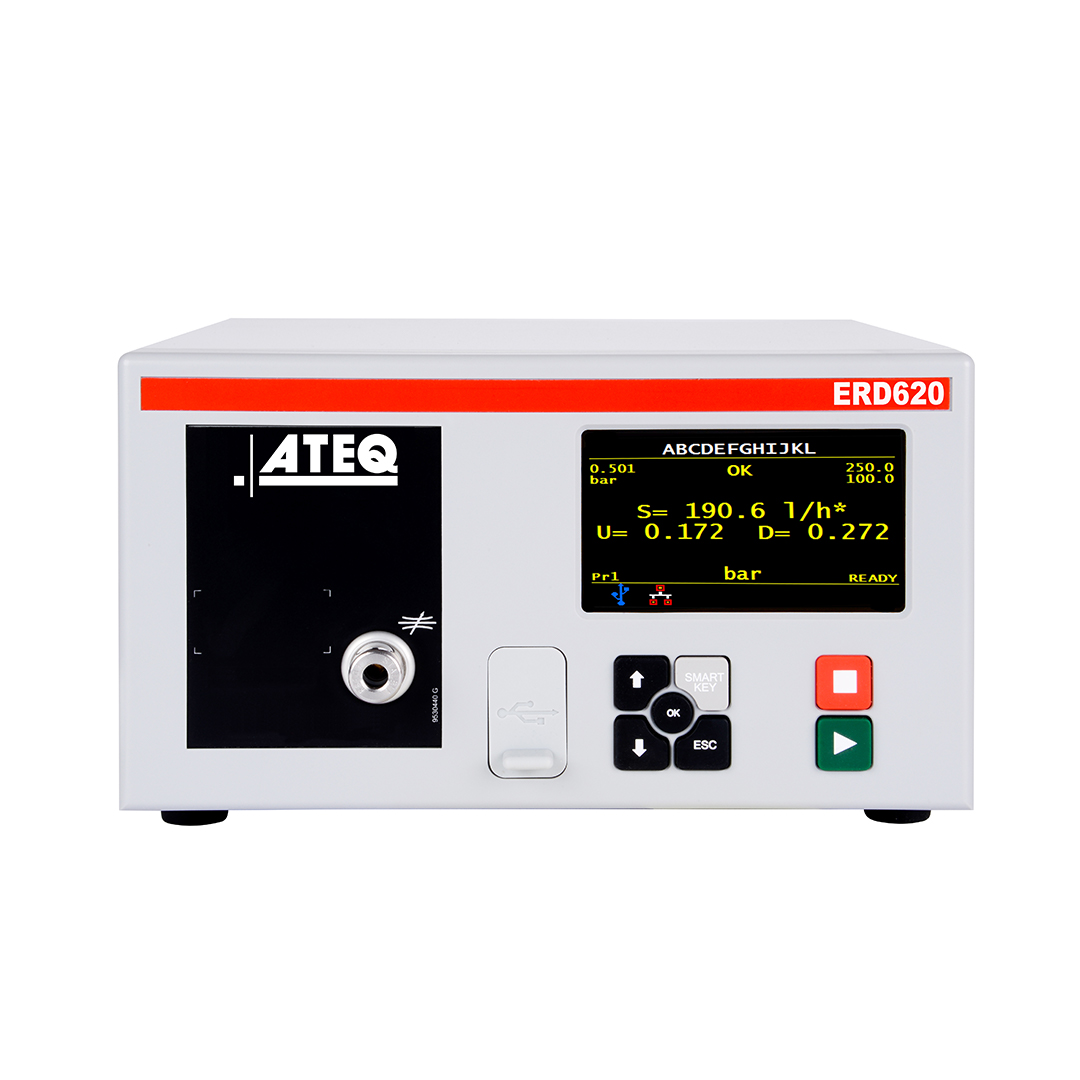
Photo of the ATEQ ERD620 flow tester device

ERD620

ADVANCED VALVE TESTING FOR ENHANCED QUALITY CONTROL

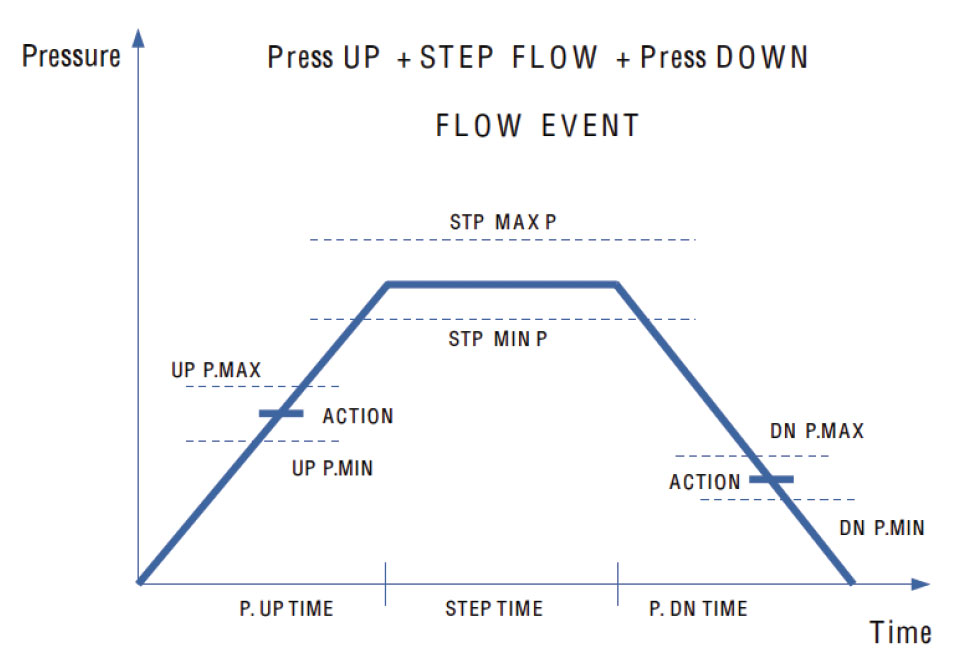
The ERD620 is ATEQ’s latest innovation in valve testing, designed to ensure precise flow control, leak detection, and pressure monitoring. This compact and high-performance tester generates a pressure ramp to detect flow events, such as valve opening and closing, ensuring compliance with strict quality standards.

Equipped with a large color display, the ERD620 provides real-time monitoring of pressure levels and flow variations, helping manufacturers maintain consistent product quality. The instrument records critical parameters, compares them to predefined reject levels, and offers multiple communication interfaces, including USB, Modbus RTU, and Ethernet/IP, for seamless integration into production lines.

GET A QUOTE

APPLICATION

  • FLOW CONTROL

    • Valves
    • Opening valves
    • Closing valves

FEATURES

  • GENERAL

    • Flow measurement in direct or indirect testing
    • Wide flow measurement range
    • Setting on line (via USB)
    • 2 languages (English + another one)
    • Measurement element fully integrated into one module
    • Data storage on internal memory or USB key
  • TEST MODES

    • Flow units (sccm, mm³/s, cm³/s, cm³/min, cm³/h…)
  • ENVIRONMENT

    • ROHS Standard
  • FLEXIBLE COMMUNICATION FORMAT

    • RS232: Printer, Modbus RTU
    • Slave USB: USB key ti transfer data (parameters, results…)
    • Master USB: USB key to transfer (parameters, results, …)
    • Option Fieldbus: Profibus, Devicenet, Profinet, Ethernet/IP
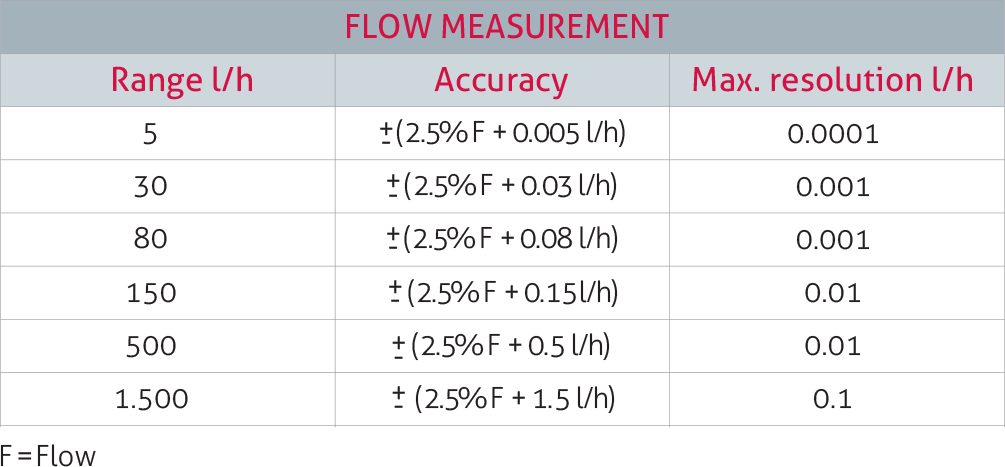
Table with ERD620 measurement ranges
Technical drawing of the ATEQ ERD620

SPECIFICATIONS

  • PHYSICAL

    • Weight: 7 Kg
    • Dimensions: (WxHxD) 250x150x360 mm
  • ELECTRICAL SUPPLY

    • 24VDC/2A or 100-240VAC/50W
  • TEMPERATURE

    • Operating: + 5°C at + 45°C
    • Storage: 0°C at + 60°C
  • INTERFACE

    • Graphic color screen with simple and intuitive menu-driven operator controls
    • SMART KEY: programmable key with user’s functions
  • AIR SUPPLY

    • Clean and dry air
    • Air quality standard to be applied (ISO 8573-1)

OPTIONS

  • ADD-ONS

    • 9 inputs / 5 local outputs compatible with 5 series instruments
    • 6 inputs/ 6 outputs 24 V programmable for external automation
    • External capillary: Close to the test part
    • 2 pneumatic outputs for control of sealing connectors
    • Memory card for archiving results (400,000)

TECHNOLOGY

FLOW TESTER PRINCIPLE

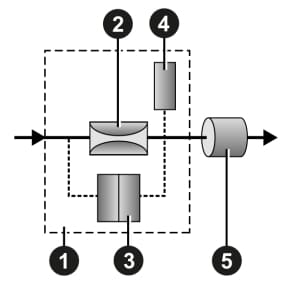
Every flow generates a pressure difference between the inlet and outlet of the laminar flow element, and this variation is measured by the pressure transducer.

When the fluid (gas) enters the device 1, it moves through a calibrated flow tube 2 which causes a drop in pressure. The pressure drop is measured by a differential pressure sensor 3. The pressure of the part under test 5 is measured by the sensor 4.

Illustration demonstrating the laminar flow measurement principle

Sometimes a leak can be considered as a “small flow”, or a flow as a “big leak”. When your reject level is too high for other technologies, it may be necessary to use a laminar flow tester. A flow takes place between the pressure line and the leak hole of the part.

Our instrument features a laminar flow element across which our differential pressure transducer is connected.

DOCUMENTATION