10 LEAK‑TESTING MISTAKES (AND WHAT TO DO INSTEAD)
Leak testing makes sure a product’s case stops air, liquids, or gases from getting in or out.
From cars to medical devices and data centers, leak testing keeps products sealed and reduces failures over their lifecycle.
In this white paper, we will review 10 common mistakes industrial manufacturers can avoid when leak testing.
 10 MISTAKES TO AVOID

1) Pick the right detection method
Bubble tests are simple but miss tiny leaks. Pick a method that meets how much leakage you can allow, fits operating conditions, and complies with regulations.
IMPORTANT: Avoid overly precise methods that increase errors and costs. Check our article & contact us for guidance.
2) Test sub-assemblies early
Inspect critical components first. Waiting until the end raises scrap, costs, and makes fixing problems harder.
3) Keep parts clean and dry
Oils, water, and dirt can block leaks and give wrong readings. Clean and dry parts before testing.
4) Stabilize temperatures
Air expands and contracts with temperature changes. Let parts and the room get to the same temperature.
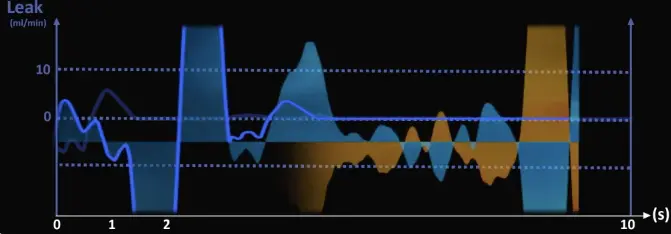
GOOD TO KNOW: ATEQ’s DNC technology reduces environmental noise—like doors opening or temperature changes—for better results.
5) Maintain stable test pressure
Pressure that goes up and down messes with results. Size air systems right, control pressure, and don’t go over system limits.
6) Use the right test for what you’re testing
Air might act different from the liquid or gas in the product. Define acceptable leak rates considering viscosity, safety, and service life.
7) Define proper cycle times
Rushing fill, stabilization, measurement, or dump phases risks inaccurate results. Optimize times for sensitivity and repeatability.
8) Ensure correct setup
Do not use hoses that are too long or short, quick connects, or bad seals. Follow guidelines and use certified fittings.
9) Use verification tools
Perform regular checks with certified leak standards or reference parts. Track drift and train operators to respond to deviations.
10) Schedule preventive maintenance (!!)
Aging components, dirty filters, and contaminants reduce stability. Replace filters, inspect parts, keep air clean and dry, andx plan periodic calibration.
 How a Leak Test Works (Cycle & Timing)
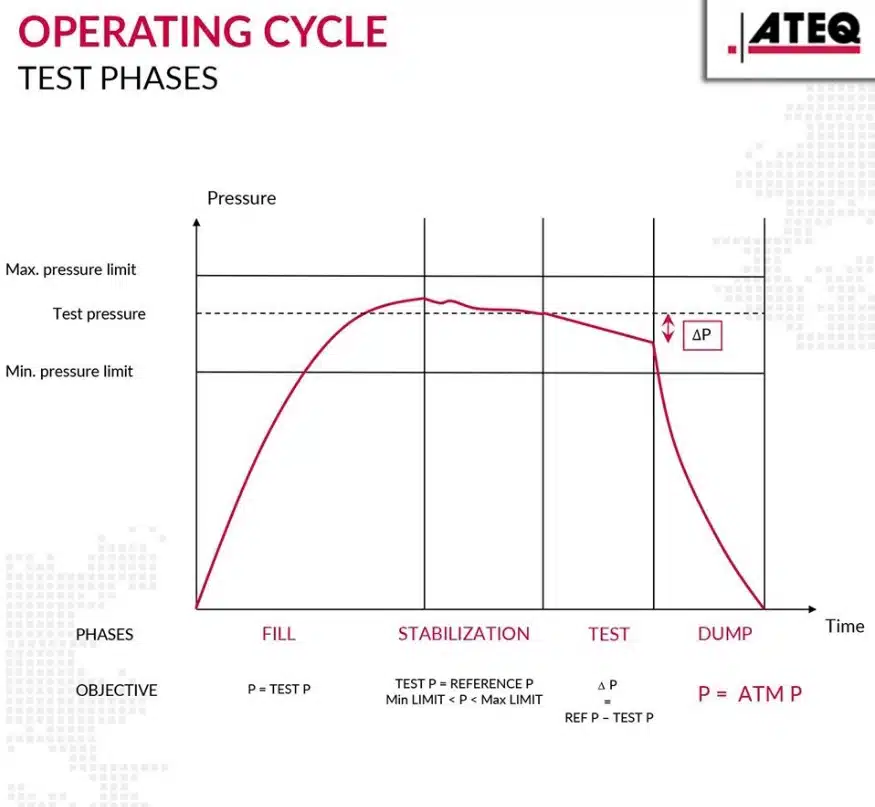
THE 4 PHASES
Fill: reach test pressure
Stabilization: let transients settle
Test: monitor ΔP vs threshold
Dump: depressurize safely
CYCLE TIME BASICS
Set fill and settle times safe, then find the best settings.
Change measurement time to find small leaks without slowing things down.
Benefits of Using ATEQ for Industrial Leak Testing
The right answer for every case.
ATEQ provides pressure-decay instruments with easy integration (manual, semi-auto, or fully auto) and data-tracking features.
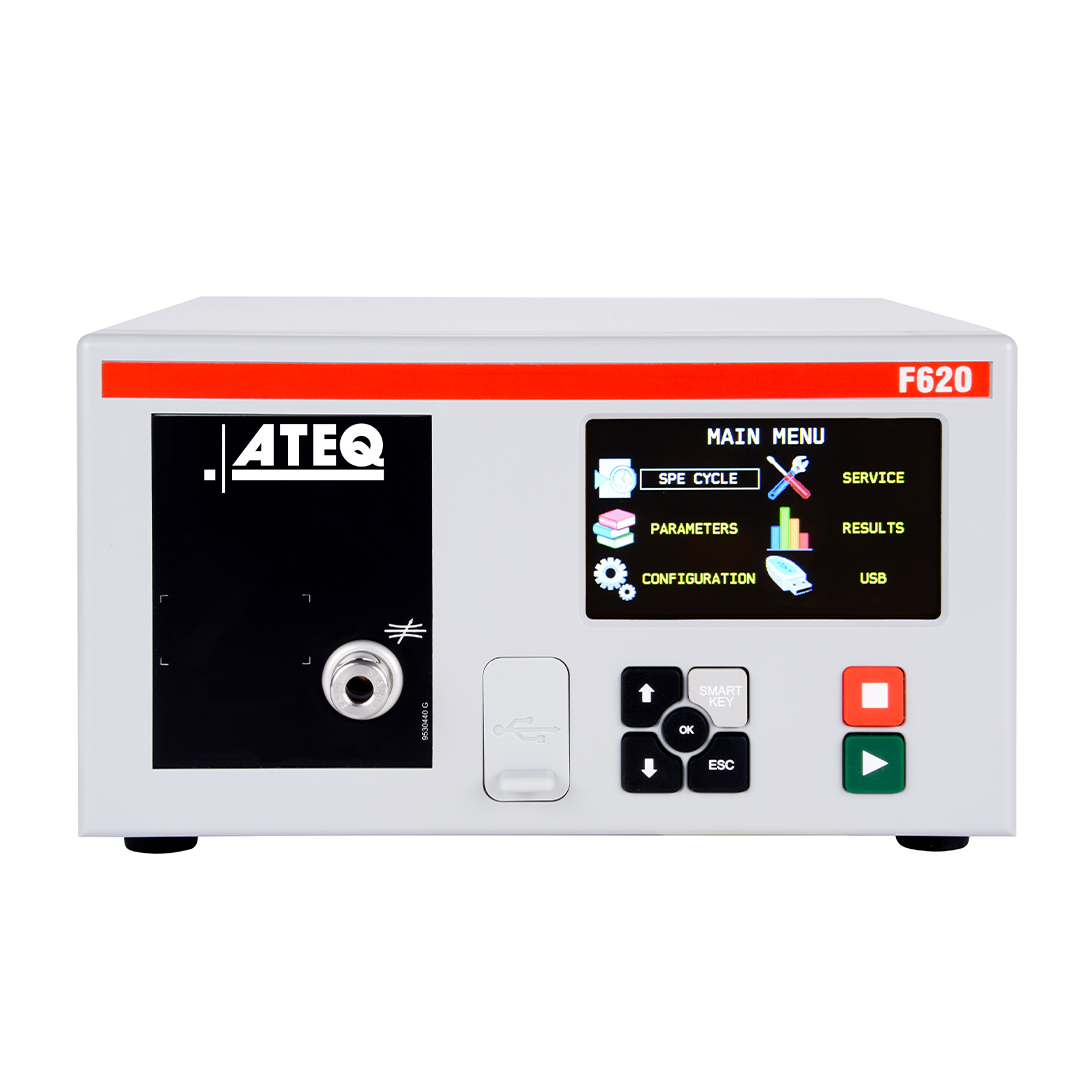
For example, the F620 offers differential pressure measurement with broad ranges (vacuum to 20 bar) allowing it to fit a wide range of applications.
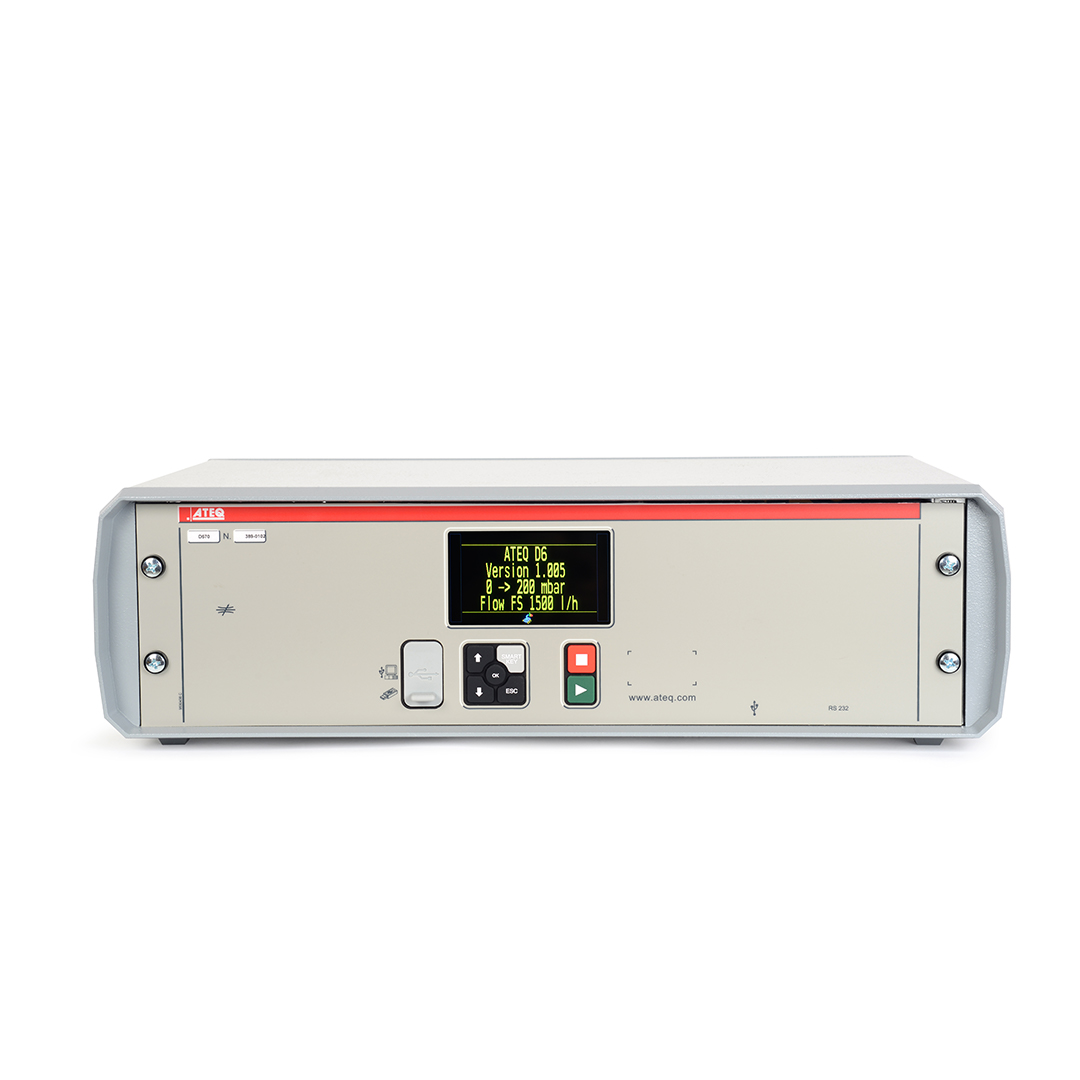
For large-volume parts (e.g., tanks, EV battery enclosures), you can use the F620LV (or the F670LV for industrial rack format). LV versions are also available for flow applications with the D series. LV options use a high-sensitivity transducer and large-flow valves to maintain speed without sacrificing detection.
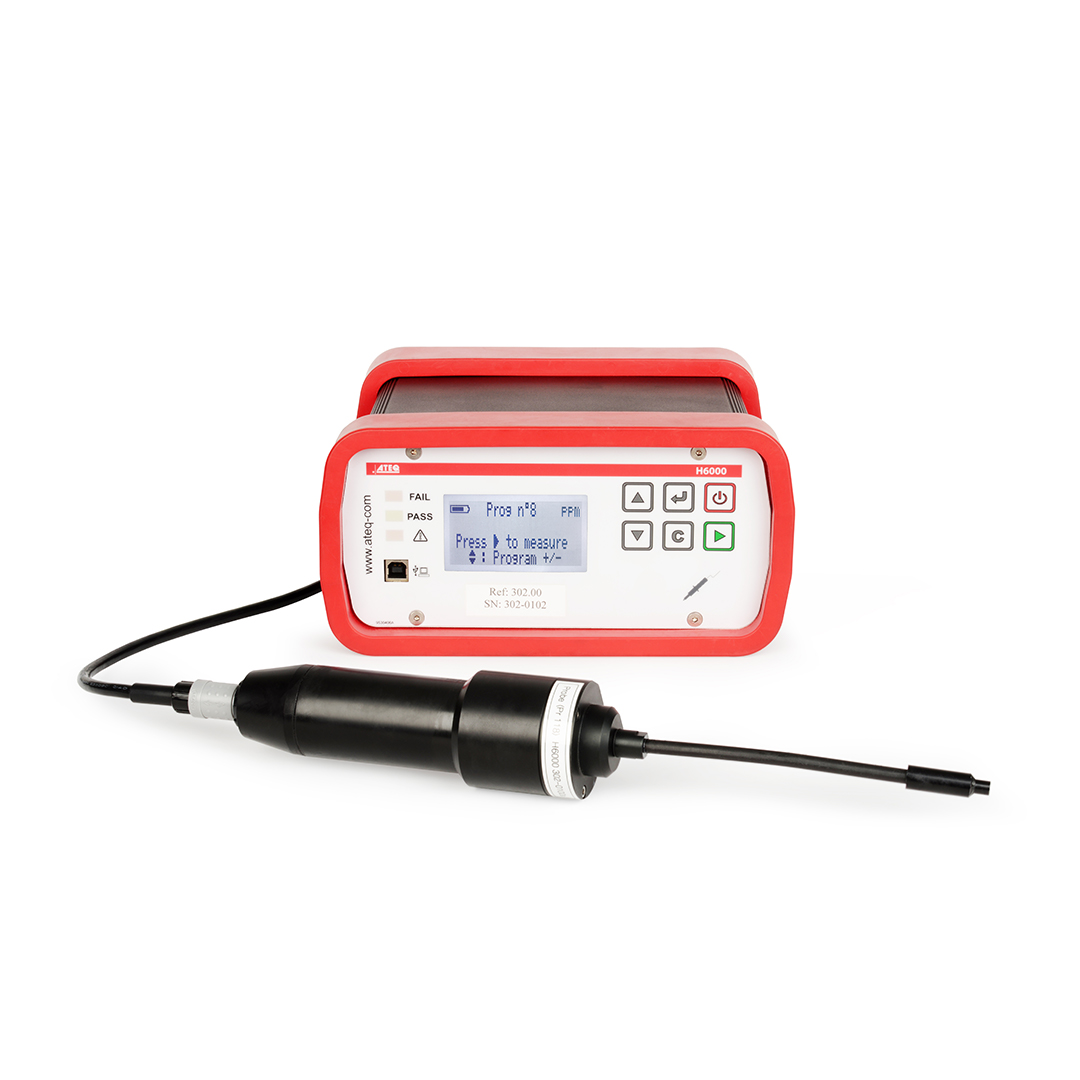
Tracer gas solutions using helium or hydrogen are relevant options for applications requiring ultra-high sensitivity.
Global support, local service.
Our expert engineers can assist you with setting up and testing at your location, whether you’re in the USA or anywhere else in the world.
ATEQ also provides calibration services both on-site and in ISO 17025-certified labs.